

8171 Ramzan Package Check Rs. 13,000 & Rs. 10,000 Payments Updates Full Guide 2026
8171 Ramzan Package Check
8171 Ramzan Package Check Government of Pakistan has introduced the 8171 Ramzan Package 2026 to provide financial relief to low-income families during the holy month of Ramadan. Every year, many households struggle to manage rising food prices, utility bills, and other essential expenses. Ramadan brings additional responsibilities such as preparing daily Sehri and Iftar meals, which increases the financial pressure on families with limited income. To reduce this burden, the government has designed a targeted financial assistance program that directly supports deserving households.
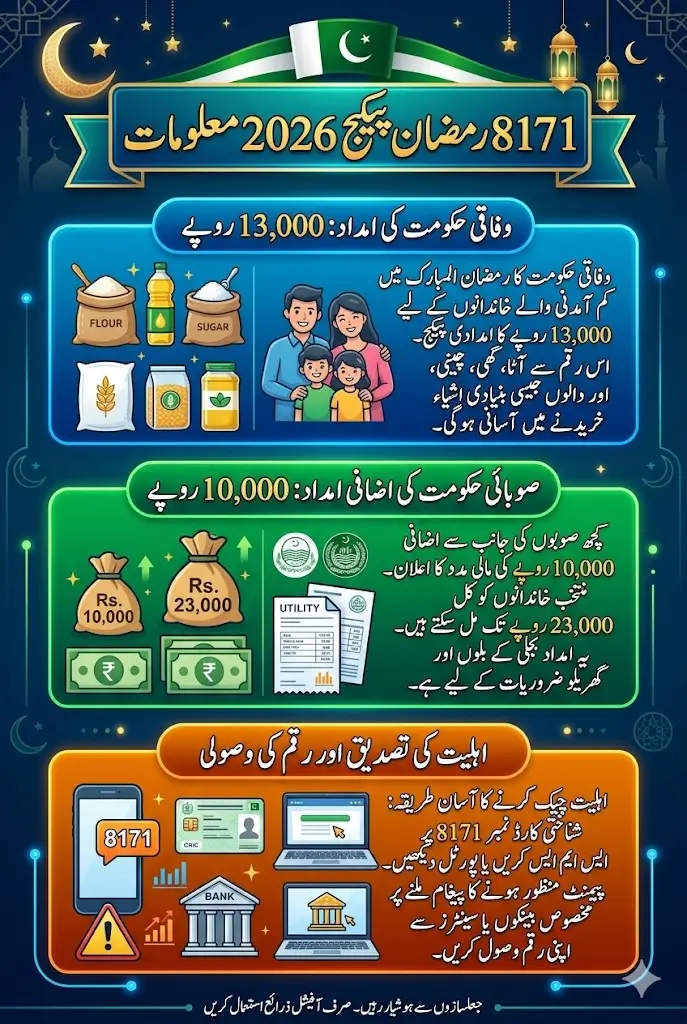
Through this initiative, eligible citizens can receive Rs. 13,000 federal assistance, while some provinces are providing an additional Rs. 10,000 support to families living in selected regions. The most important feature of this program is the CNIC-based verification system, which allows citizens to check their eligibility quickly through SMS or an online portal. This system ensures transparency and removes the need for long visits to government offices.
For millions of Pakistani families, especially daily wage earners and people living in rural areas, the Ramzan Package has become a crucial support system. It helps them purchase essential groceries, cooking items, and household necessities so that they can observe Ramadan with dignity and peace of mind.
Government Relief Initiative for Ramadan 2026
The launch of the 8171 Ramzan Package reflects the government’s broader strategy to support vulnerable communities during important religious occasions. Ramadan is a time when families focus on prayer, charity, and community, but it is also a period when household expenses increase. Recognizing this challenge, the government introduced a structured financial support program that distributes funds directly to deserving citizens.
The program operates through the national welfare database, which contains information about millions of households across Pakistan. This data is used to determine which families qualify for financial assistance. By linking this information with identity verification systems, the government ensures that only genuine beneficiaries receive payments.
Unlike older welfare programs that required lengthy registration procedures, this system uses digital technology to make the process simple and accessible. Citizens can verify their eligibility within minutes without visiting offices or filling out complicated forms.
The main objectives of the Ramzan Package include:
- Providing financial support to low-income families during Ramadan
- Ensuring transparent distribution of government assistance
- Reducing financial stress caused by rising food prices
- Delivering funds directly to deserving households without intermediaries
- Using digital systems to speed up eligibility verification
These improvements have made the program more efficient and accessible to citizens across Pakistan.
Financial Assistance Available for Eligible Families
The most important feature of the 8171 Ramzan Package 2026 is the financial assistance provided to deserving households. The federal government has allocated Rs. 13,000 per eligible family, which is intended to help families manage basic household expenses during Ramadan.
In addition to this federal support, some provincial governments have also announced additional assistance of Rs. 10,000 for selected beneficiaries. This combined support can significantly help families cover the costs of food, utilities, and other necessary items during the holy month.
For families with limited income, this assistance can make a meaningful difference. Rising prices of essential food items such as flour, sugar, cooking oil, and pulses have made it difficult for many households to manage their budgets. The Ramzan Package helps reduce this pressure and ensures that families can prepare proper meals for Sehri and Iftar.
Key financial benefits of the program include:
- Rs. 13,000 direct federal financial support
- Additional Rs. 10,000 assistance in selected provinces
- Possible combined support of up to Rs. 23,000 for some families
- Direct transfer through official payment channels
- Notification of payments through SMS alerts
This structured financial assistance ensures that funds are distributed fairly and reach the households that need them most.
CNIC-Based Verification System for Transparency
One of the major improvements introduced in the Ramzan Package system is the digital CNIC verification process. This system allows citizens to check their eligibility by simply entering their national identity card number. The system then connects with government databases to determine whether the applicant meets the eligibility requirements.
This digital verification method reduces the chances of fraud and ensures that assistance is provided only to deserving families. In previous years, many welfare programs faced criticism due to delays or lack of transparency. The CNIC-based system addresses these issues by making the process faster and more reliable.
The verification process works by checking several factors such as income level, household data, and poverty score. These records are already stored in the national poverty database, which is regularly updated through surveys and government records.
Advantages of the CNIC verification system include:
- Quick eligibility checks through online portals or SMS
- Reduced paperwork and simplified procedures
- Transparent identification of deserving households
- Easy access for citizens living in rural areas
- Faster approval and payment distribution
This digital system is an important step toward modernizing social welfare programs in Pakistan.
Eligibility Requirements for the Ramzan Assistance
The government has established specific criteria to ensure that financial assistance is provided only to households that genuinely need support. These conditions are based on economic data, poverty scores, and household income information available in official databases.
Families that fall within the lower income category are given priority. At the same time, individuals with higher income levels or stable government employment are usually excluded from the program.
Below is a summary of the key eligibility conditions used to determine whether an applicant qualifies for the Ramzan Package.
| Requirement | Description |
|---|---|
| Valid CNIC | Applicant must possess an active and verified national identity card |
| Income Level | Priority given to low-income households and financially vulnerable families |
| Poverty Score | Determined through the national poverty assessment database |
| Tax Status | High-income tax filers are generally not eligible |
| Government Employment | Regular government employees are usually excluded from the program |
Citizens who believe their data is outdated should update their household information through the NSER survey system, as accurate records can affect eligibility for current and future welfare programs.
Simple Online Method to Check 8171 Ramzan Package Status
The government has made the eligibility checking process extremely simple through an official online portal. Citizens who have access to the internet can verify their status within seconds by entering their CNIC number.
The online system is designed to be user-friendly so that even individuals with limited digital experience can use it easily. Once the CNIC is entered, the system immediately checks the government database and displays the applicant’s status.
Steps to check eligibility online:
- Open the official Ramzan relief portal
- Enter your 13-digit CNIC number without spaces
- Complete the captcha verification
- Click the submit button to view your status
After submitting the information, the portal usually shows one of the following results:
- Eligible for financial assistance
- Application under verification
- Not eligible for the program
This online system helps citizens avoid unnecessary travel and allows them to confirm their eligibility from the comfort of their homes.
Checking Eligibility Through 8171 SMS Service
For citizens who do not have internet access, the government has provided a simple SMS verification system. This method is particularly useful for people living in rural areas where internet connectivity may be limited.
The SMS service allows applicants to check their eligibility by sending their CNIC number to the official 8171 code. Within a short time, they receive an automated response indicating whether they qualify for the program.
Steps for checking eligibility through SMS:
- Open the messaging application on your phone
- Type your 13-digit CNIC number
- Send the message to 8171
- Wait for the automated response message
Possible responses from the system include:
- Eligible – Your payment has been approved
- Under verification – Your data is still being reviewed
- Not eligible – You do not meet the program criteria
Applicants should ensure that the SIM card used for sending the message is registered in their own name to avoid verification problems.
Payment Collection Options for Beneficiaries
Once a beneficiary is approved, the government provides several payment collection methods so that citizens across the country can receive their funds conveniently. These payment channels are designed to serve both urban and rural populations.
Beneficiaries usually receive an official SMS notification that provides instructions about where and how to collect the payment. This notification ensures that applicants visit only authorized locations and avoid confusion.
Common payment distribution channels include:
- Designated bank branches for direct withdrawals
- Government-approved payment centers
- Authorized retailers in certain regions
- Digital mobile wallet services where available
The use of multiple payment channels helps reduce overcrowding and allows beneficiaries to collect their funds without unnecessary delays.
Common Reasons Why Applications Are Rejected
Some applicants may receive a “Not Eligible” message after checking their status. This does not always mean that they are permanently disqualified; sometimes the issue is related to outdated records or incorrect information in the database.
Common reasons for rejection include:
- Expired or inactive CNIC
- Incorrect CNIC number entered during verification
- Household income exceeding eligibility limits
- Applicant registered as a tax filer
- Government employment records in official databases
Updating household data in the national poverty registry can help improve eligibility for future welfare programs.
Safety Guidelines for Applicants
Whenever large government relief programs are announced, scammers sometimes attempt to exploit citizens by sending fake messages or asking for registration fees. Applicants should remain cautious and follow only official procedures.
Important safety instructions include:
- Send your CNIC only to the official 8171 number
- Do not share OTP codes or personal banking details with anyone
- Never pay agents who claim to guarantee eligibility
- Ignore unofficial WhatsApp or social media messages
- Use only government portals for eligibility checks
Following these precautions can help citizens avoid fraud and ensure that they receive their financial assistance safely.
Importance of the Ramzan Support Program for Families
For many Pakistani families, the Ramzan Package has become an important source of financial support. Rising inflation has made it increasingly difficult for low-income households to manage everyday expenses, especially during Ramadan when food consumption increases.
The assistance provided through the 8171 program allows families to purchase essential food items such as flour, rice, lentils, cooking oil, and sugar. It also helps them manage electricity bills and other household costs.
More importantly, the program ensures that families can observe Ramadan without constant financial stress. By providing direct financial assistance, the government helps maintain dignity and stability for vulnerable communities across the country.
Latest Updates for the 2026 Ramzan Relief Program
For the 2026 program, authorities have introduced several improvements to make the system faster and more transparent. These updates aim to ensure that assistance reaches deserving families before Ramadan begins.
Recent improvements in the system include:
- Upgraded digital CNIC verification technology
- Faster SMS response system for eligibility checks
- Improved coordination between federal and provincial support programs
- Expanded coverage to include more deserving households
- Phased payment distribution before and during Ramadan
These updates reflect the government’s efforts to improve social welfare systems and ensure efficient distribution of financial assistance.
Conclusion
The 8171 Ramzan Package Check Rs. 13,000 & Rs. 10,000 Payments program is a major relief initiative designed to help low-income families manage their expenses during the holy month of Ramadan. By using a digital CNIC verification system, the government has made it easier for citizens to check eligibility and receive financial assistance without complicated procedures.





Eligible families can verify their status through the online portal or by sending their CNIC number to 8171 via SMS. Once approved, they can collect their payments through authorized banks or payment centers.
For millions of households across Pakistan, this program provides timely support that helps them meet essential needs and observe Ramadan with peace, dignity, and stability. Keeping your CNIC information updated and following official verification methods will help ensure a smooth and successful payment process.